
About Wisconsin
An Overview of Wisconsin
Wisconsin, a Midwestern state in the United States, boasts a rich tapestry of geographic diversity, cultural heritage, and significant contributions to both industry and agriculture.
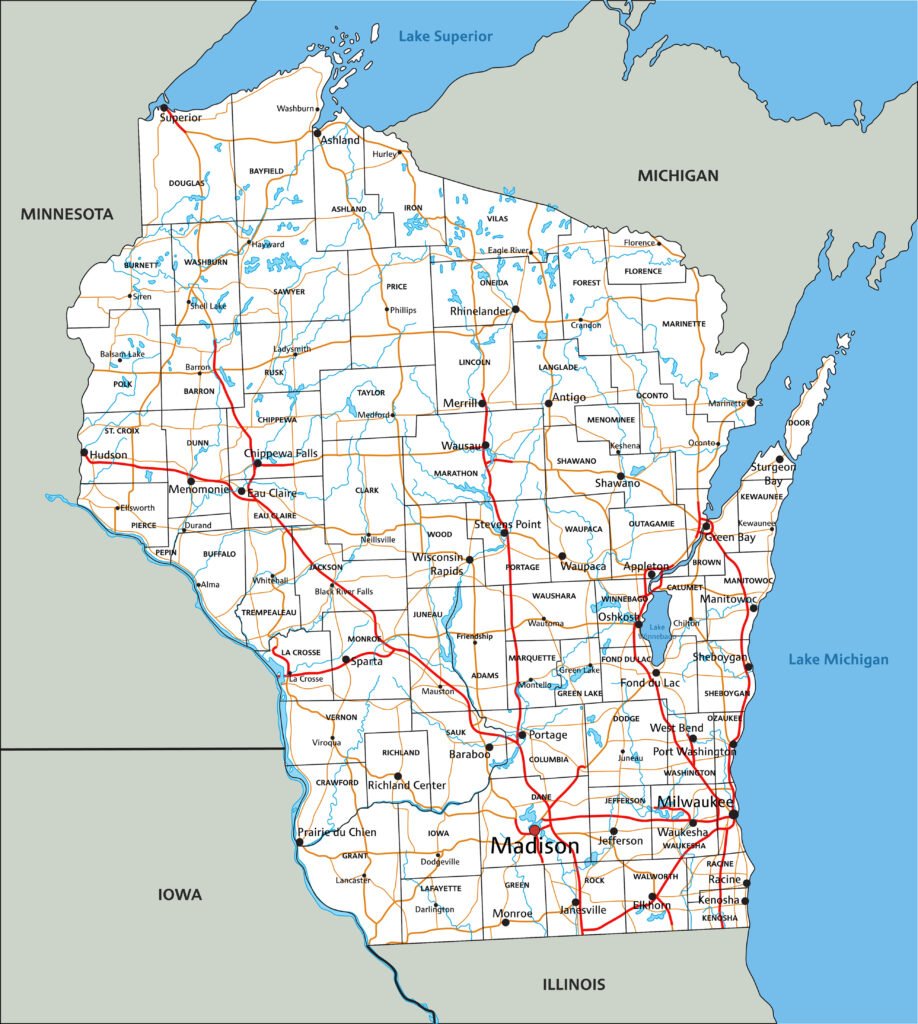
Nestled between Minnesota to the west and Illinois to the south, this state features an array of landscapes including rolling hills, picturesque lakes, and expansive farmland that contribute to its scenic beauty and outdoor recreational opportunities. Wisconsin's natural resources have played a crucial role in shaping its economic landscape, with agriculture remaining a cornerstone of its communities.
The state's major cities, including Milwaukee, Madison, and Green Bay, serve as vibrant hubs of activity and culture. Milwaukee, situated on the shores of Lake Michigan, is celebrated for its brewing heritage and lively arts scene, while Madison, the state capital, is renowned for its educational institutions and diverse culinary landscape. Green Bay, home to the iconic Green Bay Packers, adds a unique layer of camaraderie and sports culture to the state, drawing visitors and locals alike to its professional football games.
Beyond the urban centers, Wisconsin's rural areas are characterized by charming small towns and expansive agricultural land. The state is often referred to as "America's Dairyland," reflecting its status as a leading producer of dairy products, particularly cheese. This agricultural prowess is complemented by a festival calendar that highlights local traditions, foods, and arts, showcasing the rich cultural tapestry woven throughout Wisconsin.
Map of Wisconsin
A Brief History of Wisconsin
Wisconsin's history is rich and multifaceted, tracing its origins to Indigenous peoples who inhabited the region for thousands of years before European contact. Various Native American tribes, including the Ojibwe, Oneida, and Menominee, created complex societies that thrived on the diverse natural resources of the land. The arrival of European explorers in the 17th century marked the beginning of significant change, as figures like Jacques Marquette and Louis Jolliet sought to map the Mississippi River, ultimately opening new pathways for trade and interaction.
The fur trade played a pivotal role in Wisconsin's early history, attracting French and later British traders to the area. The waterways provided essential channels for transporting goods, fostering relationships between Indigenous groups and European settlers. By the late 18th century and into the early 19th century, American settlers began to arrive, drawn by the promise of fertile land and economic opportunities. This influx contributed to escalating tensions between settlers and Native populations, leading to conflicts such as the Black Hawk War in 1832, which highlighted the struggles of Indigenous peoples during this period of expansion.
Wisconsin was officially admitted to the Union as the 30th state on May 29, 1848. Its early years were marked by agricultural development and a growing immigrant population, notably Germans, Scandinavians, and Irish, who significantly shaped cultural and social dynamics. The state's strategic location also facilitated its involvement in the Civil War, as Wisconsin contributed many soldiers and resources to the Union cause. The late 19th and early 20th centuries witnessed the Industrial Revolution's impact, leading to urbanization, industrial growth, and significant advancements in infrastructure.
Several notable figures emerged from Wisconsin's history, including the abolitionist and politician, William H. Seward, and notable progressive leader, Robert M. La Follette, who championed social reforms in the early 20th century. Wisconsin's historical narrative is thus characterized by its Indigenous roots, European exploration, significant socio-political changes, and a continual evolution that influences the state's identity to this day.
Geography and Natural Features
Wisconsin is situated in the north-central United States and is bordered by Lake Michigan to the east and the Mississippi River to the west. This strategic location places Wisconsin in the Great Lakes region, a distinct area known for its rich water resources and diverse ecosystems. The state’s geography is marked by an array of natural features that contribute to its allure and economic vitality. The Wisconsin River, which flows over 430 miles, is a central feature of the landscape, providing recreational opportunities, scenic views, and essential water resources for both local communities and wildlife.
In addition to the river, Wisconsin is home to the Kettle Moraine, a glacially formed region that showcases rolling hills, kettle lakes, and rich, fertile soil. This area is significant not only for its stunning landscapes but also for its biodiversity. Numerous state parks, such as the Kettle Moraine State Forest and Devil’s Lake State Park, offer abundant activities like hiking, camping, and bird watching, essential for promoting tourism and recreation. The natural resources found within these parks facilitate both ecological preservation and economic development, attracting visitors year-round.
Wisconsin is renowned for its numerous lakes, with over 15,000 across the state. These lakes, including the well-known Lake Winnebago, enhance the state’s recreational offerings and significantly contribute to local economies through fishing, boating, and tourism-related businesses. The state's forests also play a crucial role in defining its geography, providing timber, wildlife habitats, and a serene landscape for both residents and visitors. Overall, Wisconsin’s diverse geography and natural features not only underscore its beauty but also illustrate their importance in shaping the state’s economy and tourism industry.
Climate of Wisconsin
Wisconsin boasts a diverse climate characterized by its four distinct seasons, providing residents and visitors alike with a varied experience throughout the year. The state is primarily located in the humid continental climate zone, which contributes to significant variations in temperature and weather across different regions. Average temperature ranges in Wisconsin vary considerably, with winter temperatures dipping as low as 0°F in January, while summer can bring highs around 80°F to 90°F in July and August.
Precipitation in Wisconsin typically averages between 30 to 40 inches annually, with the majority falling during the late spring and summer months. Rain is common, particularly in the southern parts of the state, while northern regions tend to experience higher snowfall amounts during the winter months, often exceeding 100 inches. This variability greatly impacts local agriculture, as different crops may thrive in specific climatic conditions. For instance, corn and soybeans are prevalent in the warmer southern regions due to longer growing seasons, whereas cooler northern areas are more suited for small grains like barley and oats.
The influence of weather extends beyond agriculture, shaping seasonal activities that define the state's lifestyle. In winter, residents engage in snow-related sports such as skiing and snowmobiling, while the summer months open up opportunities for fishing, boating, and enjoying the state’s numerous parks and lakes. Spring and fall serve as transitional periods, bringing vibrant displays of color and mild weather, perfect for outdoor activities like hiking and apple picking. The rich climate of Wisconsin not only nurtures diverse ecosystems but also cultivates a unique cultural identity that celebrates the beauty of each season.
Demographics of Wisconsin
Wisconsin, often known for its picturesque landscapes and vibrant culture, presents a diverse demographic profile that reflects the complexities of its social fabric. As per the latest statistics, the state's population stands at approximately 5.9 million residents. This figure has showcased a steady growth trend, although at a slower pace compared to some neighboring states. The population density reveals significant urban and rural disparities, with major cities like Milwaukee and Madison exhibiting greater density levels, while vast rural areas dominate much of the state.
Ethnically, Wisconsin has seen a rise in diversity over the years. Originally known for its predominantly White population, the state has experienced an increase in the Hispanic, African American, and Asian communities. Specifically, Hispanic residents now comprise around 7% of the population, while African Americans represent about 6.5%. This increase in ethnic diversity has enriched the cultural landscape, influencing everything from culinary offerings to local festivals.
Age distribution also plays a crucial role in shaping Wisconsin's demographics. The state has a relatively older population, with a median age of approximately 39 years. This demographic trend presents both challenges and opportunities, as the ageing population necessitates adjustments in healthcare, employment opportunities, and community services. In addition, education levels in Wisconsin are comparatively high, with nearly 90% of residents having completed high school and over 30% holding a bachelor’s degree or higher, which is significantly above the national average. This emphasis on education continues to be a driving force behind the state's labor market and economic development.
Economy of Wisconsin
Wisconsin's economy is characterized by a diverse array of industries that contribute significantly to its overall prosperity. Among the most critical sectors are agriculture, manufacturing, healthcare, and tourism. Together, these sectors play a pivotal role in defining the state's economic landscape and employment dynamics.
Agriculture has historically been a cornerstone of Wisconsin's economy, with dairy farming standing out as a major contributor. Renowned as "America's Dairyland," Wisconsin is the leading producer of cheese in the United States, reflecting the prominence of this industry in the state. The agricultural sector not only supports thousands of jobs but also sustains numerous ancillary businesses related to food processing and distribution.
In addition to agriculture, manufacturing remains a vital component of Wisconsin's economy. The state excels in producing various goods, including machinery, automotive, and metal products, which are critical for both domestic and international markets. The manufacturing industry provides a substantial number of jobs and drives technological innovation. However, this sector has faced challenges, particularly with globalization and technological advancements, which necessitate continuous adaptation by companies operating in the region.
Healthcare is another significant industry within Wisconsin, promising both growth and stability. The state is home to several prestigious healthcare institutions that not only provide essential services but also contribute to a robust job market. With an increasing demand for healthcare professionals, this sector is expected to expand further in the coming years.
Tourism also plays a crucial role in Wisconsin's economy, attracting millions of visitors annually to its natural landscapes, recreational activities, and cultural heritage. The scenic beauty of the state, including its lakes and parks, combined with various festivals and events, bolsters the tourism sector, creating jobs and stimulating local economies.
Overall, while Wisconsin's economy is influenced by various sectors, it faces challenges such as workforce shortages and the need for economic diversification. Nevertheless, the ongoing developments in agriculture, manufacturing, healthcare, and tourism present numerous opportunities for future growth and resilience.
Cultural Heritage and Traditions
Wisconsin’s cultural heritage is a vibrant tapestry woven from its Native American roots and the traditions brought by European immigrants. The state is home to eleven recognized Native American tribes, each contributing unique customs, languages, and histories. These indigenous communities maintain their cultural practices through art, storytelling, and festivals, such as the annual Indian Summer Festival held in Milwaukee, which celebrates Native American culture with traditional dance, food, and crafts.
The influx of European settlers in the 18th and 19th centuries significantly shaped Wisconsin's cultural landscape. Immigrants from Germany, Scandinavia, Poland, and Italy introduced a plethora of traditions, resulting in a rich cultural blend evident in various local celebrations and cuisine. For instance, the cheese-making practices brought by European settlers have made Wisconsin renowned for its cheese production, contributing to the state’s identity as "America's Dairyland."
Festivals, such as Summerfest in Milwaukee, illustrate the cultural vibrancy found within the state. Known as the “World’s Largest Music Festival,” it features a diverse lineup of artists, spanning genres and attracting thousands of visitors every year. Similarly, the Wisconsin State Fair is a hallmark event that celebrates agricultural heritage while showcasing local music, art, and culinary offerings, including the beloved cream puffs.
Numerous local music scenes thrive throughout Wisconsin, reflecting the diverse ethnic backgrounds of its residents. From polka music, rooted in German and Polish traditions, to contemporary genres, the state fosters an array of musical expressions that uphold its cultural legacy. In addition to music and festivals, traditional foods such as bratwursts, fish boils, and cheese curds serve as cultural symbols that bring communities together during celebrations and gatherings.